Projects · 2022 – present

Things I built

Ventures

Currently building

Agent Service Index

Live Founder · May 2026 –

The discovery layer for the agent economy.

agentserviceindex.com · Founder

AI agents can't really transact yet. Every signup is a captcha, an OAuth dance, a dashboard built for a human with a credit card. ASI is the missing piece: a public registry where agents send a natural-language query ("cloud hosting," "a subdomain on the open internet," "a way to pay another agent in USDC") and get back services they can actually call. Onboarding is one prompt. No keys to rotate, no plans to pick.

The registry ships with three first-party services that prove the stack end-to-end — permissionless EC2, instant subdomains via Cloudflare Tunnel, and an x402 payment helper that makes funding an agent seamless. This is built on MCP, EIP-3009, and the assumption that within a year the median internet customer will not have hands.

agentserviceindex.com Web 4.0 - The long pitch

Sidequest Local

Live Founder · Dec 2025 –

For when your friends are busy, but you're not.

sidequestlocal.com · Sidequest Local, Inc. · Charlottesville, VA

You have a free afternoon. You text twenty friends. Fifteen don't reply, four are busy, one says "maybe later." You stay home. All the while, there were people in your town wanting to do the same thing. This is the problem that Sidequest solves.

Sidequest is a social discovery app for spontaneous local meetups featuring a real-time feed of spontaneous small group activities happening in your town. Instead of wasting time and effort texting twenty friends, open Sidequest to effortlesly find an activity to join or post your own.

sidequestlocal.com App Store → Play Store →

Research

Awards · presentations · papers

Flexible Input Networks (FINs)

The Air Force has a problem called the Airlift Logistics Challenge: a Pickup-and-Delivery instance where the number of aircraft, cargo items, and airfields all change between problem instances, and a policy model has to output a variable number of actions at each step. No standard neural architecture handles reasoning across each modality elegantly.

So I designed Flexible Input Networks: a class of architectures that learn over "sets of sets" of arbitrary cardinality and output variable-length action sets in a single forward pass. This architecture requires no autoregression, no recurrence, and no padding tricks. The formalism generalizes beyond logistics to any multi-modal, variable-cardinality problem.
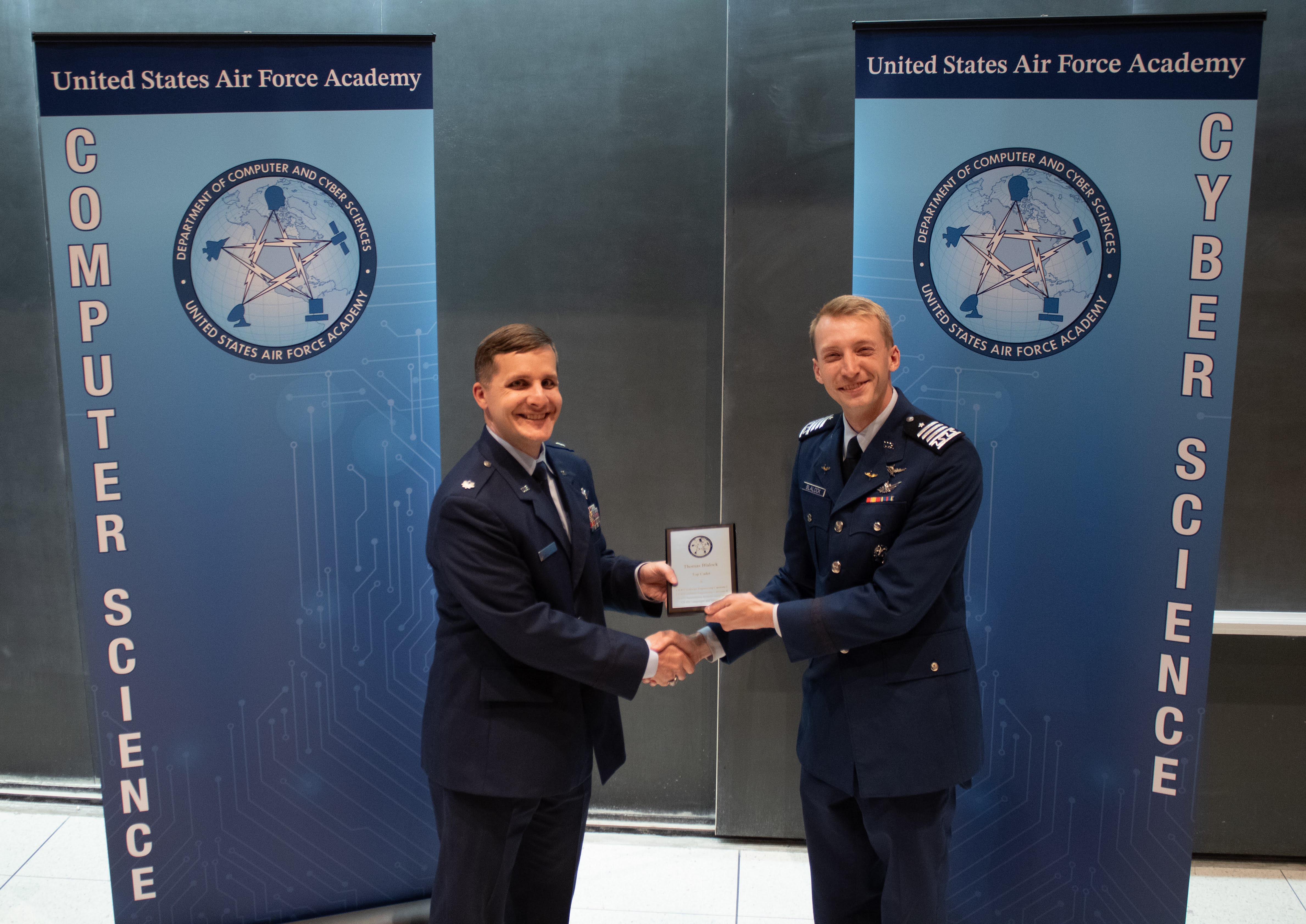
#1 USAFA Computer Science Research Project · Summer 2024 Briefed at CORONA 2024 to the Secretary of the Air Force and Chief of Staff of the Air Force.
github · FINs_Airlift_Challenge

Informed Machine Learning

A summer at the NSA's math group, trying to answer: can you make an LLM hallucinate less on technical text by bolting an expert-curated ontology into its encoder, rather than by making it bigger? We built an attention-based autoencoder whose encoder was fused with a domain knowledge base, then evaluated it on semantic extraction over scientifically nuanced documents.

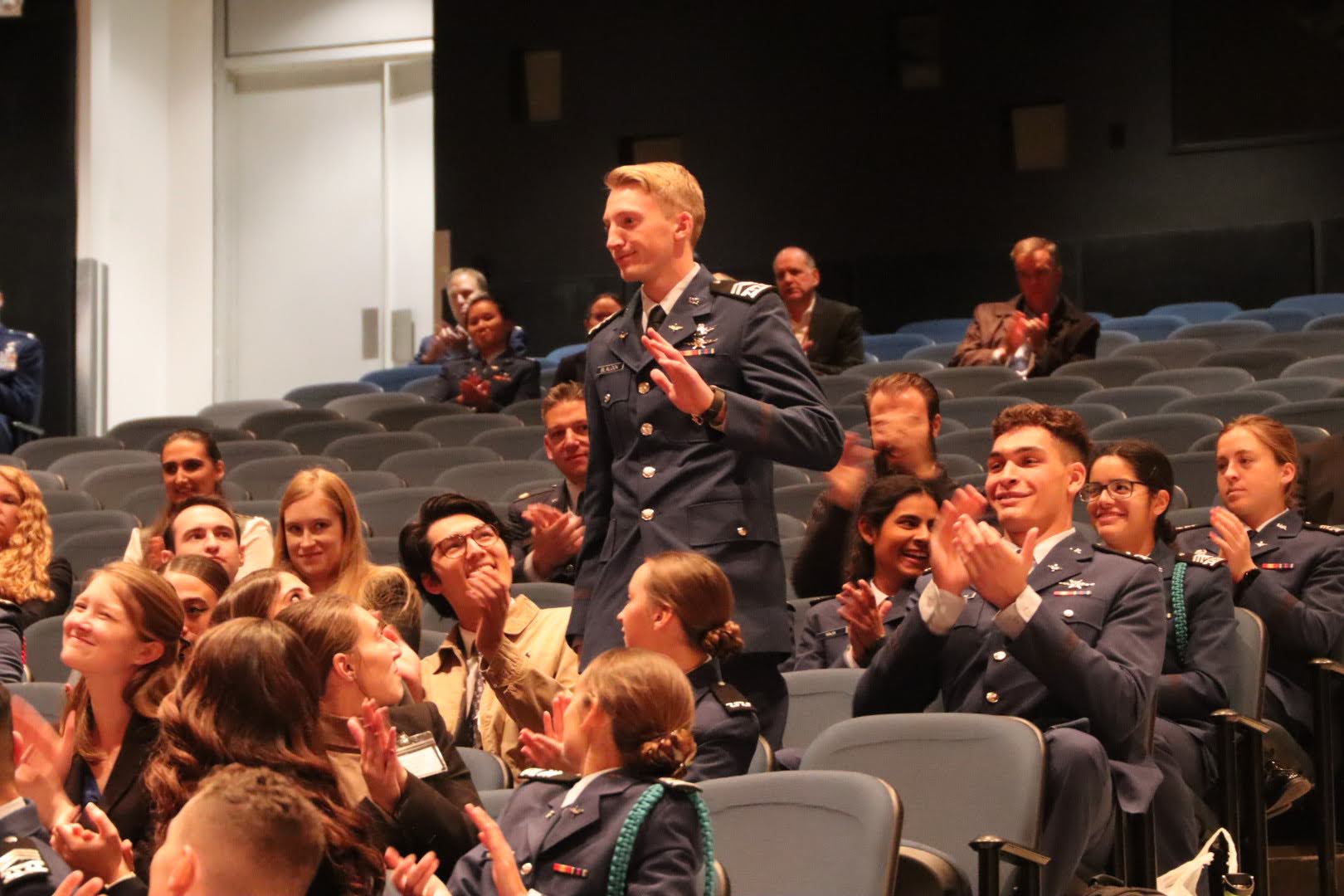
#1 USAFA Junior Engineering Research Project · Summer 2023 (CSRP, Engineering Division) Briefed to the Director of the NSA; presented at CORONA 2023 to the Secretary of Defense.
Thomas Blalock receiving a research award at USAFA, 2023.
Recieving an award, 2023.

NATO Alliance Space Deterrence

Russia destroyed a satellite with a kinetic ASAT in late 2021 and left a debris field that's still in orbit. In response, NATO commissioned a series of space deterrence wargames meant to develop a framework spanning the diplomatic, informational, military, and economic instruments of power. I led a 29-cadet research team that helped to construct the inagural wargame.

The output was a set of policy frameworks for national and alliance authorities detailing how the alliance should signal, escalate, and respond to attacks in a domain where attribution is hard, collateral damage is quasi-permanent, and there are few established rules.

Western Regional Honors Conference 2023
USSPACECOM Space Law Conference 2023
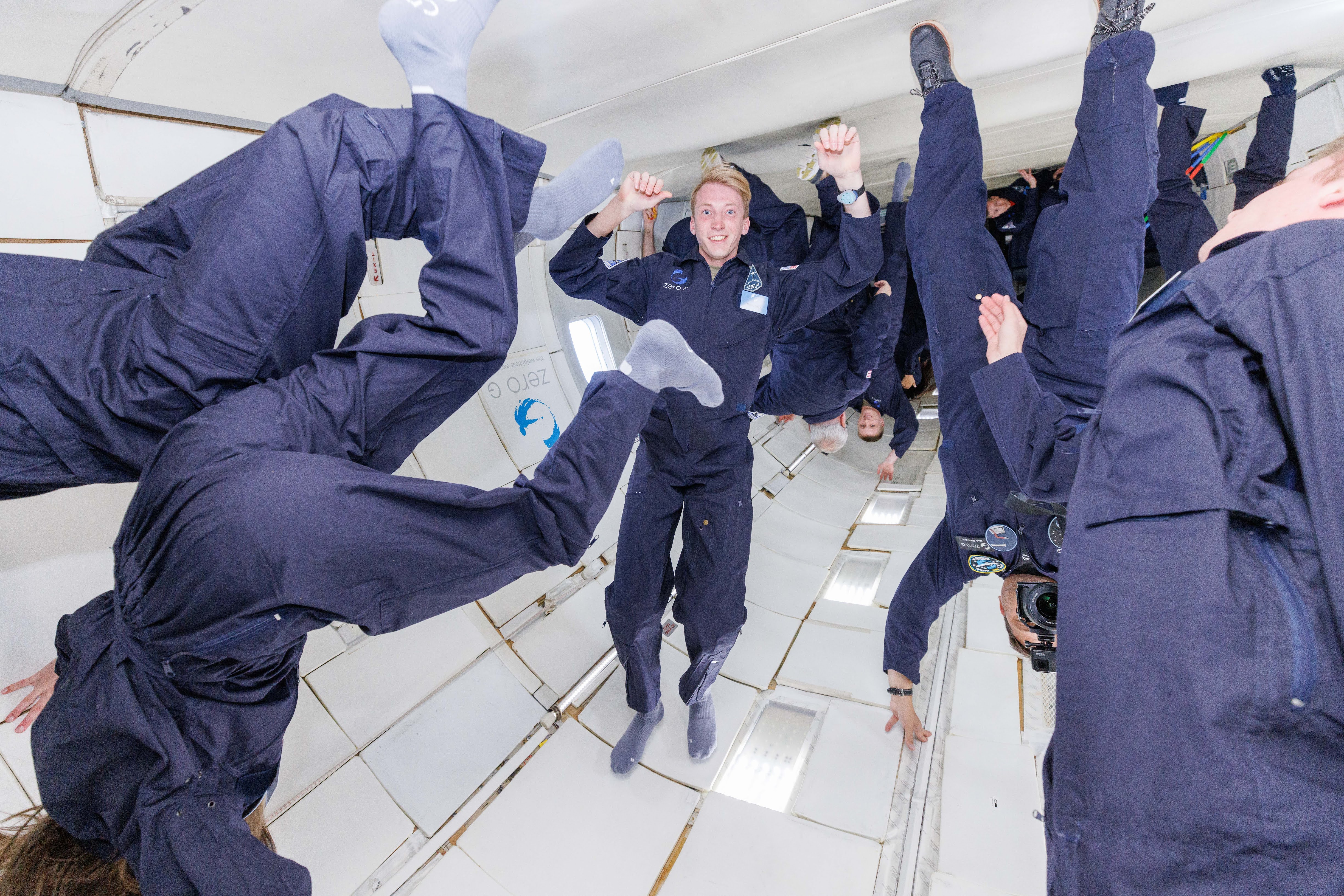
USAFA cadets aboard a Zero-G parabolic flight during space operations training, 2022.
Parabolic flight training, USAFA Space Operations, 2022.
media · talk video

Engineering

Things I built

I built malware that phishes your friends

This system is agentic malware that gets into your email account, reads your existing threads, and replies inside those threads with spear-phishing messages that sound like you wrote them, threading into a real conversation already in your inbox. Imagine you ask a friend for help on a project. Our malware responds to you in that thread from your friend's account with a phishing link that downloads a trojan. The malware replicates and repeats.

The point wasn't to ship an attack. The point was to show what the social-engineering threat surface looks like the moment LLMs become competent at reading context and writing convincingly. The result is uncomfortably good. The defensive posture most organizations have today — "users will spot phishing if it sounds off" — is now a bet against a model that has read your last six months of email.

Thomas Blalock at the USAFA Center for Cyberspace Research.
USAFA Center for Cyberspace Research.

EEG Brain–Computer Interface (P300 Speller)

A P300 speller is a system that lets you type by thinking. Letters flash on a grid; when the one you're attending to flashes, your brain produces a measurable spike about 300ms later. A good classifier turns those spikes into characters.

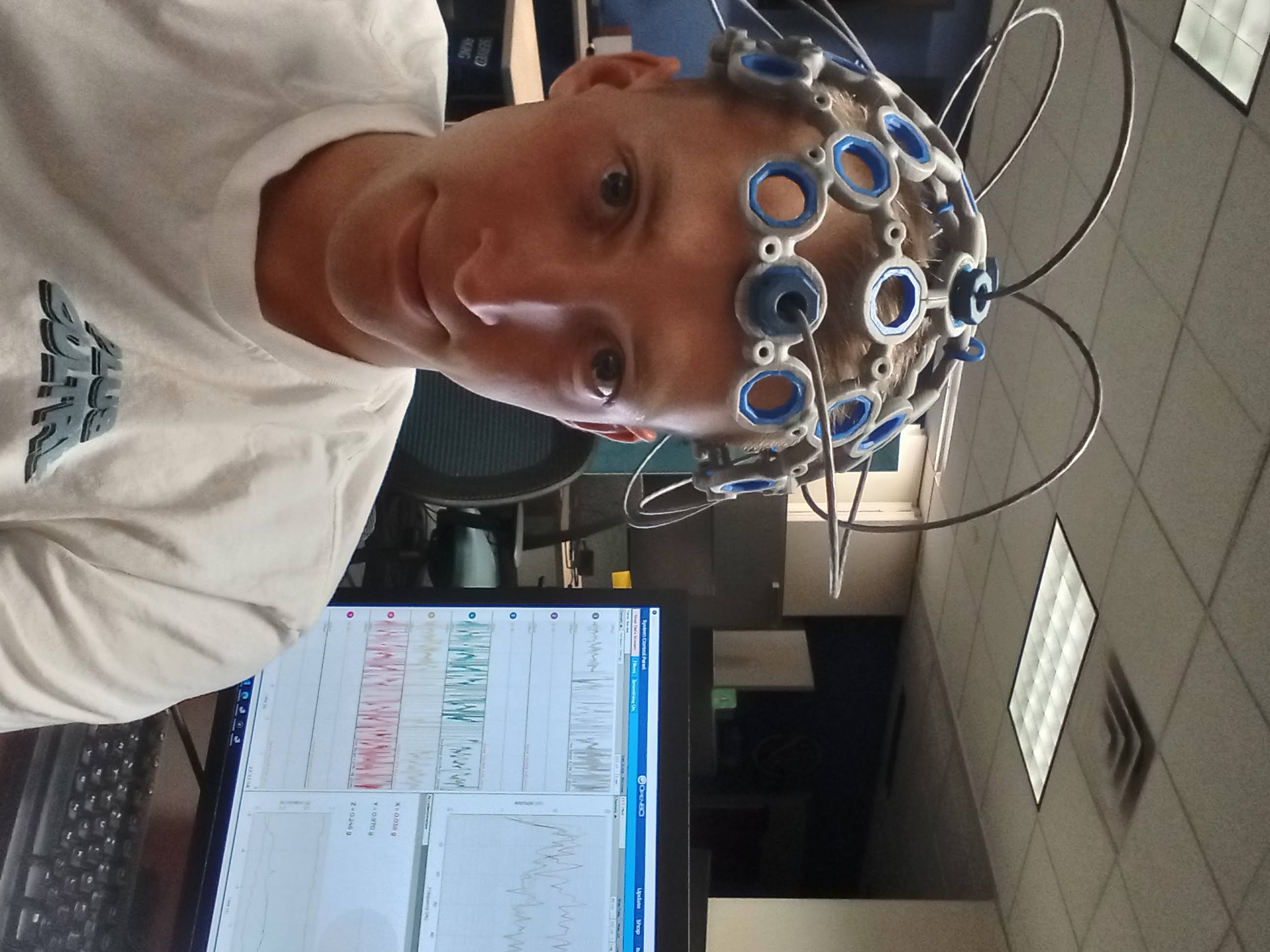
I built the whole pipeline end-to-end including the EEG helmet hardware, the flashing stimulus GUI, the data collection harness, and a recurrent CNN classifier that translates raw voltages into typed text. The primary use case is communication for people with ALS or other severe motor disabilities, who have intact cognition but no reliable way to output language.

Custom EEG brain-computer interface helmet built by Thomas Blalock for a P300 speller.
The EEG helmet, mid-build.
github · P300_BCI_Speller

Won a rover race against other cadets

The class assignment: train a vision-only autonomous rover, then race it head-to-head against the other students' rovers on a track none of us had seen using only a camera.

I started with behavioral cloning from a handful of human-driven laps to get a working baseline, then fine-tuned with RL, rewarding faster completion of subsections and punishing off-track behavior.

Trained policy (behavioral cloning), autonomous run.
github · Autonomous_Rover

Facial Recognition Similarity Query

Show the system one photo of a person, and it pulls every other photo of that person out of a 40,000+ sports-photo database. The backbone is a CNN transfer-learned from a face-recognition base model and fine-tuned with a triplet loss so that embeddings of the same person cluster together, and different people drift apart. Queries hit a vector database with cosine similarity over the learned embedding space.

github · Image_Guyver